Hidden South Kashmir: Daksum, Aharbal, Kokernag and Verinag
A local's guide to south Kashmir: Mughal spring gardens, Martand Sun Temple, Aharbal Waterfall, Daksum, Sinthan Top and an 8-night route with Yusmarg.
Most travellers never venture north of Srinagar beyond Wular Lake, yet Kupwara district hides two of Kashmir’s loveliest and least-visited valleys. Lolab, often called the “Valley of Love”, is an oval valley of orchards, rice fields, walnut groves and forested hills, dotted with traditional villages. Bangus is a vast, high meadow ringed by forest, where shepherds graze their flocks in summer and the silence is almost complete.
Both are slowly opening to tourism and remain largely unspoiled. This guide covers how to get there, what to see, when to go, where to stay, permits and practical tips, plus a suggested north Kashmir itinerary.
| Lolab Valley | Bangus Valley | |
|---|---|---|
| District | Kupwara | Kupwara |
| From Srinagar | About 3.5 to 4 hours | About 4 to 5 hours |
| Landscape | Orchards, rice fields, villages, forested hills | High open meadows ringed by forest |
| Best time | April to October | June to September |
| Stay | Tourist huts, homestays | Basic huts and camps |
Distances and times vary with routes and road conditions; drive in daylight.
From Srinagar, the road heads north-west through Sopore, an apple-trading town, and on to Kupwara. For Lolab, continue to the villages around Sogam and Lalpora. For Bangus, the usual approach is via Handwara and Rajwar, climbing through forest to the meadows. Roads to Bangus are open only in the warmer months. The drive passes Wular Lake, which makes a good stop.

Lolab is about 25 kilometres long, enclosed by forested hills, with the Lahwal stream running through its centre. It is a valley of farms and villages rather than tourist sights, which is exactly its charm.
Bangus lies at roughly 3,000 metres, a broad meadow system divided into Bodh Bangus (the larger) and Lokut Bangus (the smaller), surrounded by forested ridges. In summer, the meadows are carpeted in grass and wildflowers, and Gujjar and Bakarwal shepherds bring their flocks to graze.

Facilities are basic, so set expectations accordingly: simple rooms, home-cooked food and limited connectivity.
| Night | Stay | Plan |
|---|---|---|
| 1–2 | Srinagar | Houseboat, Mughal Gardens, old city |
| 3–4 | Lolab | Drive via Sopore and Wular Lake; village walks, Kalaroos |
| 5 | Bangus | Meadow walks, camping or hut stay |
| 6 | Srinagar | Return via Handwara |
This is our North Kashmir Explorer: Lolab & Bangus Valleys package.
Lolab’s nickname is often said to come from the word lol, which means love in Kashmiri. Whatever its true origin, the name suits the valley well. It is gentle and enclosed, with orchards and rice fields cradled by forested hills, villages of traditional houses, and clear streams. Kashmiri poets have long praised its beauty, and local stories link it to legends of saints and lovers. Spend a slow day walking between villages and you’ll see why people here are so proud of it.
The main road from Srinagar to Sopore and Kupwara is good. Roads into Lolab are generally fine for cars, though narrower. The road up to Bangus is steeper and rougher in parts, passing through dense forest, and is open only in the warmer months. Travel with an experienced local driver in a sturdy vehicle, avoid driving after dark, and check conditions before you set out. After heavy rain, some stretches can be muddy or temporarily blocked.
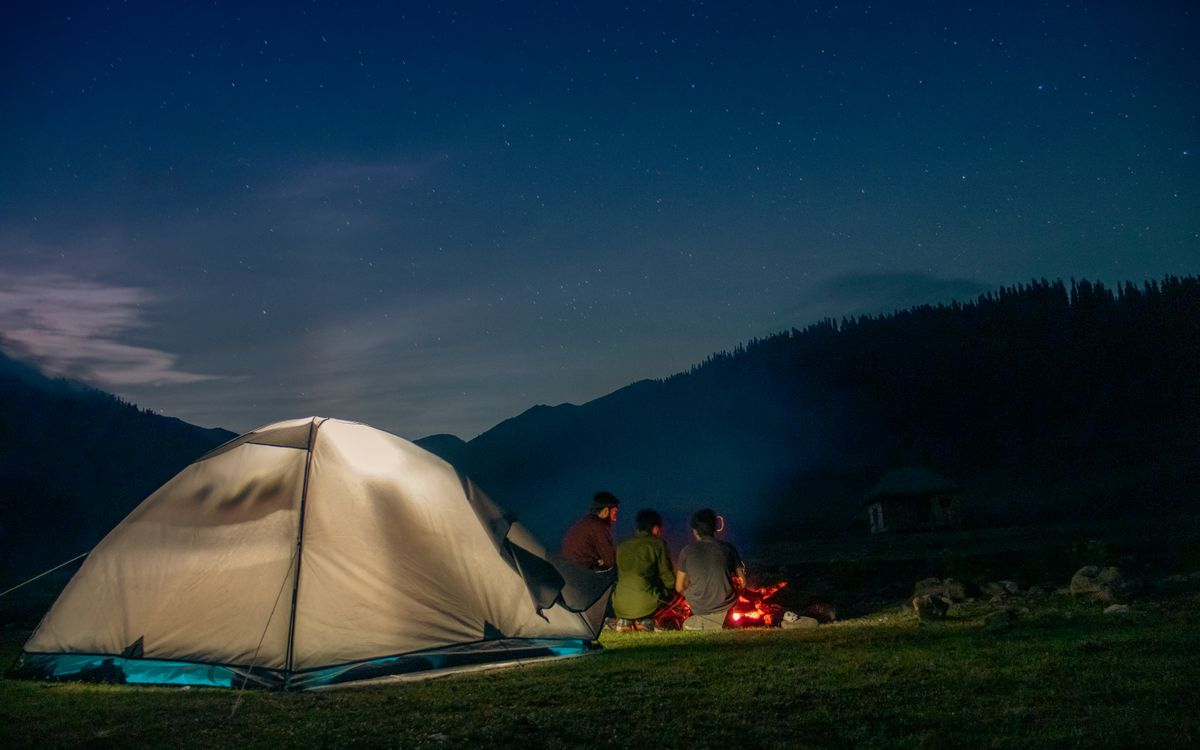
For many travellers, a night camping in Bangus is the highlight of a north Kashmir trip. Camps are usually set up by operators on the edge of the meadow, with tents, sleeping bags and simple meals. On a clear night, the sky is filled with stars and the only sounds are the wind and distant sheep bells. Bring warm layers, as nights are cold even in summer, and a torch. Leave the meadow exactly as you found it.
If you have extra time in the north, a few other places make good additions to your route.
Wular is one of the largest freshwater lakes in Asia, fed by the Jhelum. Its size changes with the seasons, and its shores are lined with willow plantations, fishing villages and fields. Stop at a viewpoint near Bandipora or Watlab, where the Baba Shukur-ud-din shrine sits on a hill above the lake, offering wide views across the water. Sunsets here are spectacular, and birdlife is rich in winter, when migratory ducks and geese arrive.
Sopore, on the way north, is one of Asia’s biggest apple trading hubs. In autumn, the fruit mandi (wholesale market) is a riot of activity, with trucks loading crates for markets all over India. It’s a fascinating glimpse into Kashmir’s farming economy, and roadside stalls sell freshly picked apples at good prices.
On the drive back to Srinagar, Manasbal is a calm, deep lake surrounded by hills, famous for its lotus flowers in summer and a quiet Mughal garden on its shore. It’s an easy, peaceful stop.
On the approach to Bangus, the Handwara area has traditional villages, walnut groves and springs. Your driver or homestay host can suggest a short walk.
| Day | Plan | Overnight |
|---|---|---|
| 1 | Srinagar to Lolab via Manasbal, Wular viewpoint and Sopore | Lolab homestay |
| 2 | Village walks, Kalaroos and forest trails | Lolab homestay |
| 3 | Drive to Bangus via Handwara; meadow walks and sunset | Bangus camp |
| 4 | Morning in the meadows, return to Srinagar | Srinagar |
This plan can be added before or after a classic Srinagar, Gulmarg and Pahalgam trip.
North Kashmir is perfect for travellers who have already seen the famous resorts, or who prefer villages and nature to crowds and shopping. It suits slow travellers, photographers, families with older children and anyone curious about rural life. It’s less suitable if you need luxury hotels, strong mobile signal or lots of organised activities. Come with time, patience and an open mind, and you’ll be rewarded with some of the most genuine experiences in Kashmir.
Yes, for travellers who enjoy rural landscapes, village life and quiet. It is very different from the busy tourist circuit.
It’s a long drive from Srinagar, so an overnight stay is much better.
Usually from around June to September, depending on snow.
Tourists visit Lolab and Bangus, especially in summer. Travel with a local operator, carry ID and follow local advice.
Accommodation is basic: tourist huts and homestays in Lolab; basic huts and camps in Bangus.
At least three nights: two in Lolab and one in Bangus, plus travel days from Srinagar.
Yes, especially in summer. Homestays in Lolab are welcoming to families. Bangus camping suits older children.
Very limited. Expect to be offline.
Our North Kashmir Explorer takes you to Lolab and Bangus with experienced drivers, local guides and homestays. Tell us your dates and we’ll check access and conditions for you.